

 By Viktor BED,
Research Institute of Strategic and Political-Legal Studies
Carpathian University named after Augustin Voloshyn
Uzhhorod,
September 5, 2025
Factual Background
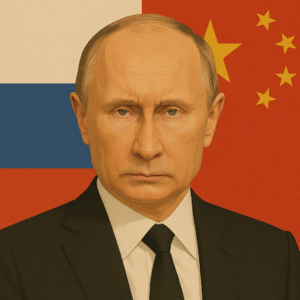
On September 3, 2025, in Beijing, Vladimir Putin held a final press conference following his participation in the SCO summit and bilateral talks with China. During his address and answers to journalists’ questions, he touched on topics of Russian-Chinese cooperation, the “Power of Siberia-2” project, relations with the United States and Donald Trump, the situation on the front in Ukraine, the legitimacy of Ukrainian authorities, the confiscation of Russian assets, as well as the issue of a “multipolar world.”
Analysis and Exposure of Putin’s Lies and Manipulations
- “Unity” within the SCO and “positive results” of the talks — propagandist exaggeration.
Vladimir Putin portrays the work of the Shanghai Cooperation Organization as a grand “demonstration of unity” and an “alternative” to the West. In reality, the SCO is a regional political platform that unites Asian countries for consultations in politics, economics, and security. It is not a military bloc and has no mechanisms of collective defense or mutual guarantees similar to NATO. Therefore, the Kremlin’s attempts to present the SCO as a genuine security counterbalance to the West are propagandist exaggeration and manipulation [1].
- “Power of Siberia-2” as a propagandist symbol of “success.”
Putin presents the framework memorandum between Gazprom and the China National Petroleum Corporation (CNPC) on the construction of the Power of Siberia-2 pipeline as if it were a finalized agreement. In fact, the document is declarative in nature, and the key conditions — pricing, supply guarantees, and implementation timelines — remain undefined. China, holding a strategically stronger bargaining position, deliberately drags out the process and pushes for the lowest possible price. This creates an asymmetric dependence of Russia on a single buyer and undermines its energy security. Thus, instead of the “success” claimed by the Kremlin, we see another political showcase that guarantees no economic benefit for Russia and merely cements its role as a raw-material appendage of China [2; 3].
- “The EU is becoming a military-political bloc” — deliberate distortion.
Putin tries to present the European Union as an analogue of NATO in order to discredit integration processes within the EU and to create an image of a “new threat” to Russia. In reality, the EU is an economic-political union that is gradually developing a Common Security and Defence Policy (CSDP), but it is not a military alliance and has no collective defense commitments characteristic of NATO. The EU coordinates humanitarian, peacekeeping, and defense-industrial initiatives, yet its legal nature and functions differ fundamentally from those of military alliances. Therefore, the Kremlin’s claims are manipulation, aimed at delegitimizing European structures and justifying its own aggressive policies [4].
- “Ukraine has no right to threaten Russia’s security by joining NATO” — blatant manipulation.
The Kremlin seeks to impose the thesis that NATO enlargement automatically poses a “threat” to Russia. Yet international law is based on a fundamental principle: every sovereign state has the right to independently choose its allies and system of security guarantees. This right is enshrined in the UN Charter and the Helsinki Final Act.
Neither NATO membership nor Ukraine’s cooperation with the EU constitutes a threat to Russia, unless Russia itself chooses the path of aggression. Instead, it is Russia’s actions — the illegal occupation of Crimea, the war in Donbas, and the full-scale invasion of 2022 — that represent a gross violation of the UN Charter, as well as the principles of sovereignty and territorial integrity.
Moreover, Russia, as the aggressor state, has betrayed and violated a number of international obligations:
- The Treaty on Friendship, Cooperation, and Partnership between Ukraine and the Russian Federation (1997), which envisaged mutual recognition of borders and non-use of force;
- The Budapest Memorandum (1994), in which Russia guaranteed Ukraine’s security and territorial integrity in exchange for nuclear disarmament;
- Other fundamental agreements on mutual respect for sovereignty and the inviolability of borders.
Thus, Putin’s rhetoric is an attempt to invert cause-and-effect relationships and justify aggression, concealing the fact that it is Russia that destroyed the security system it had itself signed and guaranteed [5].
- “We are not fighting for territory, but for people’s rights” — an outright lie.
Putin attempts to justify the occupation of Ukrainian territories with rhetoric about “protecting people’s rights, their language, and culture.” In fact, this is a flagrant violation of international law and a cynical use of the concept of “self-determination” as a cover for annexation.
The so-called “referendums” organized by Russia in Crimea (2014) and in the occupied territories of Donbas, Zaporizhzhia, and Kherson regions (2022) were held under the barrels of guns, without international recognition and without Ukraine’s control. They have no legal force and directly contradict UN General Assembly Resolution 68/262 “Territorial Integrity of Ukraine” (2014), which reaffirmed Ukraine’s internationally recognized borders and rejected any forcible changes [6].
Furthermore, the concept of the “right to self-determination,” as enshrined in the UN Charter, cannot be interpreted as granting an aggressor state the right to redraw another country’s borders by force. It applies only in the context of decolonization or lawful international procedures. Moscow’s use of this norm is a cynical manipulation.
In reality, instead of “protecting people’s rights,” Russia systematically violates human rights in the occupied territories: deportations, torture, forced passportization, persecution of the Ukrainian language and culture. Particularly revealing are the violations of religious freedom: the occupation authorities persecute the Orthodox Church of Ukraine, the Ukrainian Greek Catholic Church, Protestant communities, and other religious organizations that refuse to submit to Russian demands. These actions bear the hallmarks of religious persecution and are part of a broader policy of eradicating Ukrainian identity.
- “Zelensky is illegitimate” — Kremlin disinformation.
Putin tries to present the President of Ukraine, Volodymyr Zelensky, as allegedly having lost his mandate after the expiration of the formal five-year term. This is a classic example of manipulative interpretation of the Constitution of Ukraine.
In reality, Article 108 of the Constitution of Ukraine clearly establishes the principle of continuity of presidential power: the President exercises his powers until the newly elected head of state assumes office. During martial law, elections are not held, and this is a deliberate constitutional mechanism designed to safeguard statehood and prevent a “power vacuum” during wartime [7].
Therefore, President Zelensky’s powers remain entirely legitimate, and this position is confirmed both by domestic constitutional law and international recognition. No country in the world, apart from the aggressor state Russia and its satellites, has questioned the legitimacy of Ukraine’s current leadership.
Moreover, it is Russia that has grossly violated:
- The Budapest Memorandum (1994), in which it guaranteed Ukraine’s territorial integrity;
- The Treaty on Friendship and Cooperation (1997), which obliged respect for borders;
- The UN Charter and the fundamental principles of the Helsinki Final Act.
Thus, the Kremlin’s rhetoric about Zelensky’s “illegitimacy” is nothing more than a tool of information warfare, aimed at undermining international support for Ukraine and creating the illusion of legal uncertainty — an illusion that does not in fact exist.
- “The roots of the conflict are the 2014 coup d’état” — Kremlin falsification.
Putin attempts to explain Russian aggression by citing an invented “coup d’état” in Kyiv. In reality, it was the Revolution of Dignity (November 2013 – February 2014) — a mass, peaceful protest of the Ukrainian people provoked by then-president Viktor Yanukovych’s refusal, under Moscow’s pressure, to sign the Association Agreement between Ukraine and the European Union. This decision deeply outraged society, as the majority of Ukrainians aspired to EU integration and to rejecting Moscow’s “taiga” totalitarian union.
The Revolution of Dignity was not a “coup” but a legitimate expression of the people’s right to overthrow an anti-popular, corrupt, and treacherous government that was surrendering Ukraine’s sovereignty to Putin’s Russia. Under Yanukovych, the Armed Forces of Ukraine, the Security Service, law enforcement, and the economy were dominated by Moscow’s appointees and agents, undermining independence and defense capacity.
On February 21, 2014, after three months of protests and the bloody shootings on the Maidan, an agreement between Yanukovych and the opposition on crisis settlement was signed with the mediation of EU representatives. Yet the very next day, Yanukovych fled to Russia, effectively abdicating his duties and leaving the country without a legitimate head of state. The Verkhovna Rada of Ukraine, acting within the Constitution, restored constitutional order and called early presidential elections.
It was only after this that Russia began the operation to occupy and annex Crimea and organized and supported an armed insurgency in Donbas. Thus, the true “root of the conflict” was the Kremlin’s aggressive actions, not the will of the Ukrainian people for freedom and a European future.
It is important to note that the new Ukrainian authorities were elected in May 2014 through presidential elections that were democratic and recognized by the international community as legitimate. Therefore, the Kremlin’s narrative of a “coup d’état” is an informational myth created to justify the occupation of Crimea and the war in eastern Ukraine [8].
- “300 billion in assets are being stolen” — distortion of facts.
Putin tries to depict Western decisions as “theft” of Russian state assets. In fact, the European Union and the G7 countries have not decided to confiscate the frozen assets of the Central Bank of Russia (approximately $300 billion), but rather to use the windfall profits these assets generate when invested in financial markets.
This refers to interest income accumulating on blocked accounts, which is what is being directed to support Ukraine. In 2025, a mechanism was launched to provide long-term loans to Ukraine guaranteed by these revenues, not by confiscating Russia’s principal reserves.
These actions have an international legal basis:
- they are classified as a sanctions instrument in response to Russia’s aggression against Ukraine;
- they are aimed at compensating the victim state;
- they do not violate the principle of state asset immunity, since only the income, not the principal, is used.
The Kremlin’s claim of “theft” is manipulation intended to mobilize its domestic audience and discredit international mechanisms supporting Ukraine. In reality, it is Russia’s invasion and war crimes that created the grounds for such sanctions [9].
- “On the front, all Russian forces are advancing, while the Armed Forces of Ukraine are incapable” — disinformation propaganda.
Putin attempts to create the illusion of a “general offensive” by Russian troops and of the “exhaustion” of the Ukrainian army. In reality, independent sources — including the daily updates of the Institute for the Study of War (ISW) — confirm only localized tactical advances of Russian forces on certain sections of the front, while the Armed Forces of Ukraine conduct counterattacks and hold strategically important positions [10].
The Kremlin’s claims about the “incapacity of the Ukrainian army” are an attempt to:
- demoralize Ukrainian society and sow doubt about the army’s effectiveness;
- mislead international partners to weaken military aid to Ukraine;
- conceal Russia’s own losses, which amount to hundreds of thousands of killed and wounded, along with massive equipment losses.
Analysts emphasize that:
- Russian troops conduct operations at an extremely high cost — suffering major personnel and equipment losses — achieving limited progress only through mass mobilization and redeployment of reserves, not through real superiority;
- the Kremlin’s statements about “47–48% staffing levels of Ukrainian units” are fabricated and have no confirmation in open or independent sources;
- despite heavy fighting, the Ukrainian army remains combat capable, continues to receive new weapons from partners, and retains strategic initiative in several areas.
Thus, the rhetoric about a “successful offensive of all groupings” is yet another Kremlin information operation that does not reflect the actual military situation, but is meant to obscure Russia’s own problems and mobilization failures.
Risks
Information warfare.
The Kremlin actively promotes the narrative of the Ukrainian government’s alleged “illegitimacy,” using it as a tool to undermine public trust in the President and state institutions. This disinformation is aimed not only at the domestic audience but also at the international community — to cast doubt on Ukraine’s legal subjectivity in negotiations and to weaken Western support.

Energy blackmail.
Russia seeks to use the “Power of Siberia-2” project as proof of its “stability” and as an alternative to European markets. In reality, this project is more of a geopolitical instrument of pressure than an economic achievement. It may become a tool of blackmail for China and simultaneously illustrates Moscow’s deepening dependence on a single buyer, which only increases Russia’s own vulnerability.
Political manipulation.
Moscow deliberately distorts the concepts of “self-determination” and “democracy,” exploiting them to legitimize occupation and annexation of foreign territories. In reality, such “referendums” contradict international law, are conducted under occupation control, and do not reflect the will of the people. This poses the danger of setting a dangerous precedent for the entire world.
Destruction of international law.
Russia’s aggressive policy undermines the fundamental principles of the world order — sovereignty and territorial integrity of states. If the international community agrees to the “law of force” instead of the force of law, this will pave the way for new wars and violations, where stronger states dictate conditions to weaker ones. This is not only a Ukrainian problem, but also a global threat to international security.
Forecasts
Continued exploitation of the “Zelensky’s legitimacy” narrative.
Russia will continue to systematically use the thesis about the alleged “expiration” of President Volodymyr Zelensky’s powers. This narrative will become a primary instrument of information warfare aimed at undermining Ukraine’s internal unity, delegitimizing its government on the international stage, and pressuring partners to portray Kyiv as “unconstructive” or “legally incapable” of negotiations.
Slow progress of the “Power of Siberia-2” project.
Despite the Kremlin’s loud statements, the PoS-2 project will develop slowly. The main reason is China’s pragmatic stance: it is exploiting Russia’s weakness to secure the lowest possible gas prices and avoid strict obligations on purchase volumes. For Russia, this means not a strategic breakthrough but greater dependence on a single export market and the erosion of sovereignty in its own energy policy.
Continuation of “selling peace” on Kremlin’s terms.
On international platforms, Moscow will actively promote rhetoric about its supposed “readiness for peace.” However, this will only refer to capitulation scenarios for Ukraine: recognition of the occupation, territorial concessions, and “security guarantees” dictated by Russia. Such tactics are designed to create the illusion of Kremlin “constructiveness,” while in reality the goal is to preserve conquered territories and legitimize aggression.
Recommendations
Systematic communication of the principle of continuity of presidential powers.
Ukrainian authorities, expert centers, and the media must clearly and consistently explain Article 108 of the Constitution of Ukraine, which guarantees the continuity of the President’s mandate until the newly elected head of state takes office. This will help neutralize Kremlin manipulations regarding Zelensky’s alleged “illegitimacy” and strengthen international partners’ trust in Ukrainian institutions.
Preparation for energy risks of the “Power of Siberia-2” project.
The EU and the US should anticipate potential consequences of the PoS-2 launch for the global gas market. Necessary measures include: diversification of LNG supplies, development of renewable energy sources, creation of strategic reserves, and support for Ukraine in projects on hydrogen and green energy transportation. This will reduce Russia’s potential influence on global energy security.
Creation of systematic fact-check dossiers (analytical reference materials).
It is essential to prepare consolidated dossiers for journalists, diplomats, and international partners, gathering key facts and documents: the events of 2014, UN Resolution 68/262, the Budapest Memorandum, the Constitution of Ukraine, and other international legal norms. Such materials will allow for fast and well-argued rebuttals of Russian narratives.
Clarification of the difference between self-determination and pseudo-referendums.
It is important to emphasize that the right to self-determination in international law applies in the context of decolonization or legitimate democratic procedures, but cannot serve as a pretext for annexation. Pseudo-referendums under occupation are legally null and void, while Moscow’s use of this concept is a cynical manipulation to justify aggression.
Support for public diplomacy.
Official Kyiv, Ukrainian churches, the diaspora, and civil society organizations must engage more actively in international forums to communicate the truth about Russia’s crimes, defend Ukraine’s right to self-defense, and mobilize broader global support.
Strategic actions of the Ukrainian state despite Russian aggression.
Despite the deceit and crimes of the aggressor state, the Russian Federation, and its leader Putin, Ukraine must:
- firmly defend its international rights, territorial integrity, and sovereignty, de jure never recognizing the occupied territories as Russian;
- together with international allies, employ all possible — and even seemingly “impossible” — measures to end the war on terms favorable to Ukraine;
- pursue accelerated accession to the European Union as a full member;
- seek real international security guarantees with binding legal force and enforcement mechanisms;
- strengthen and modernize the Armed Forces of Ukraine, ensuring their access to advanced strategic and long-range weapons as the key guarantee of security and deterrence.
The urgent need for a swift end to the war.
Alongside long-term goals, it is especially important to achieve the earliest possible cessation of hostilities and Ukraine’s exit from the Russian-Ukrainian war in a format that ensures:
- preservation of Ukraine’s independence and sovereignty within its controlled territory;
- cessation of mass killings and bloodletting of the Ukrainian people — both military personnel and civilians;
- prevention of the worst-case scenario — mass physical extermination of Ukrainians and forced emigration of millions to the West and beyond;
- protection of the Ukrainian nation and statehood from irreparable demographic and humanitarian losses.
The priority of the highest value — human life.
According to the Constitution of Ukraine and international law, the highest value for the state is human life, freedom, and dignity. Life itself is the most precious and irreplaceable. The Ukrainian government and society must always remember this and employ all possible — and even “impossible” — measures to preserve and protect it. This should be the main criterion in decision-making during the war: ending the mass killing and suffering of Ukrainians, which represents the greatest threat to the survival of the Ukrainian nation and statehood.
Conclusions
The press conference of Vladimir Putin in Beijing on September 3, 2025, confirmed once again: he remains a war criminal who deliberately and systematically acts in contempt of human life, freedom, dignity, and international law. At the same time, Putin is a hostage of his own lies and propaganda, attempting to present aggression against Ukraine as “defense of people’s rights,” to justify occupation with “referendums,” and to cast doubt on the legitimacy of Ukraine’s government.
Ukraine and the international community must consistently expose these manipulations and strengthen their information defense, since the Kremlin’s information war is no less dangerous than the war on the battlefield.
It is also important to emphasize:
- Ukraine, de jure and de facto, will never recognize the occupied territories as part of Russia;
- the primary tasks must remain the preservation of state sovereignty and independence in the territory under Ukraine’s control, the protection of territorial integrity, and the safeguarding of the lives of the Ukrainian people;
- the temporary loss of control over part of its territory should be viewed exclusively as a temporary phenomenon and as a violation of Ukraine’s legitimate international rights. At the same time, this must not become an insurmountable condition for ending the war, for Ukraine’s exit from the Russian-Ukrainian conflict, for accession to the European Union, or for obtaining effective security guarantees;
- Ukraine’s political leadership is obliged to recognize this, refrain from speculating on the issue of temporary occupation, and focus above all on the future of an independent Ukrainian state, rather than on approval ratings or the results of postwar elections;
- issues of territorial integrity and security must not turn the Ukrainian people and state into hostages of political games, economic manipulations, or internal corruption interests;
- with the support of international allies, all possible — and even seemingly “impossible” — measures must be taken to achieve the earliest possible cessation of the war on terms favorable to Ukraine;
- special attention must be given to protecting life, freedom, and human dignity as the highest constitutional and universal values. The life of the citizen must be the chief criterion in making political and military decisions.
Only the combination of international pressure on Russia, Ukraine’s internal resilience, and the strengthening of the Armed Forces with modern weaponry can guarantee that the sacrifices already made by the Ukrainian people will not be in vain, and that Ukraine’s future will be safeguarded.
Sources
- China showcases global ambitions at the SCO summit. September 3, 2025.
- Russia and China bless vast new Power of Siberia 2 pipeline… September 2, 2025.
- Financial Times. A China-Russia sweetheart gas deal could upset US LNG exporters. September 5, 2025.
- EU military & defence support to Ukraine. 2025.
- United Nations Charter. Chapter I, Articles 1–2.
- UN General Assembly. Resolution 68/262 “Territorial Integrity of Ukraine.” March 27, 2014.
- Constitution of Ukraine. Article 108.
- O. Vodiannikov. Ukraine’s Constitution in Wartime. 2025.
- Reuters / Kyiv Independent. EU agrees to use windfall profits of frozen Russian assets for Ukraine. 2024–2025.
- Institute for the Study of War (ISW). Russian Offensive Campaign Assessment. September 3, 2025.


